
An interview with Dr. Aria Alexander Ravery Morovati
Before arranging joint replacement abroad, the questions extend beyond the operation. Who will assess you, organize rehabilitation, check that your accommodation works and coordinate follow-up after you return? Costa Rican orthopedic surgeon Dr. Aria Alexander Ravery Morovati explains how he approaches those arrangements for international patients.
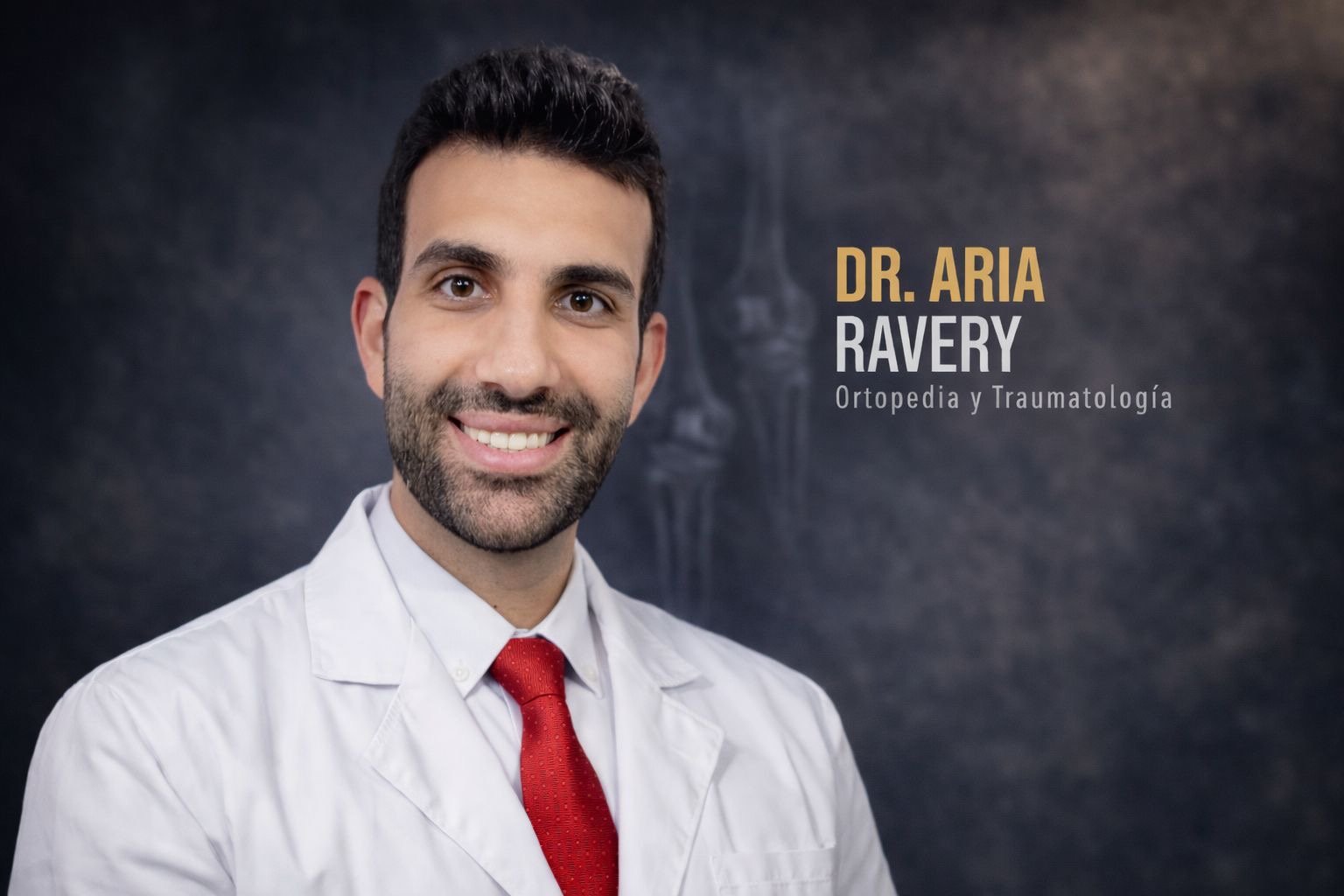
This interview has been edited from Dr. Ravery’s written answers. It describes his practice and planning approach, not an independent assessment of a provider or a recommendation that surgery or travel is suitable for you. Confirm the named clinician, hospital, services, costs and instructions for your own case before committing.
1. What should be assessed before a patient travels?
For an initial remote assessment, I normally ask for medical history, previous orthopedic reports and operations, current medicines, relevant medical conditions and recent imaging. The particular studies depend on the joint and the questions we need to answer. I may request additional imaging before the patient travels.
That review helps us discuss the likely options and whether the patient appears to be a reasonable candidate. It does not replace an examination. When the patient arrives, I still need to examine them, review their imaging and assess their movement, stability, muscle function and overall condition.
Not every patient with arthritis needs surgery. Depending on the individual case, we discuss alternatives such as physiotherapy, medicines, activity changes or continuing conservative treatment. The decision to operate, the approach and the implant remain provisional until I have evaluated the patient personally.
2. What should a written proposal explain?
It should identify the responsible surgeon, exact hospital, planned operation, proposed implant and anesthesia arrangements. It should also explain hospital charges, professional fees, medicines, postoperative supplies, rehabilitation and any additional investigations or consultations.
In my arrangements, the surgeon, assistant and anesthesiologist’s fees are packaged together. Hospital, operating-room and implant costs are packaged and paid separately to the chosen hospital. The written proposal needs to distinguish those payments clearly and state what is included and excluded.
Implant selection is individualized. Age, anatomy, activity, bone quality, previous surgery and the characteristics of the case all matter. Hospital choice also affects the proposal. If the plan changes, I explain why and discuss medical or financial implications as early as possible.
3. Who coordinates rehabilitation?
Rehabilitation is part of treatment. I prefer the first physiotherapy arrangements to be established before the patient leaves hospital, so they do not return to their accommodation without a plan.
I coordinate with a physiotherapist experienced in joint replacement. In my package, the hospital physiotherapy session on the first postoperative day is included. Therapy at the hotel may also be arranged, depending on where the patient stays; those charges are agreed with the individual therapist.
I remain responsible for surgical follow-up, while the physiotherapist works on the person’s movement and function. If progress differs from what we expect, the plan can change and I can reassess the patient. Hip and knee replacement have different rehabilitation needs, so patients should follow the instructions for their own operation rather than another person’s experience.
4. Where do you practise, and what accommodation arrangements matter?
My main consultation office is at Hospital Internacional La Católica, Office 416, in the San José metropolitan area. I report surgical privileges at La Católica, CIMA, Clínica Bíblica and Hospital Metropolitano. The specific hospital depends on the procedure and the patient’s arrangements, and costs vary. Visitors should confirm the exact location for consultation, surgery and review visits.
For accommodation, look at the actual room and route, not just a general accessibility label. Check steps or lifts, shower and toilet access, room for any required walking aid, bed and chair arrangements, and the route to transport. Discuss whether those details meet the treating team’s instructions.
Think about meals, shopping, footwear and getting into a vehicle. A companion can help with practical arrangements and organization. That does not mean a companion should assess a wound, manage a complication, change rehabilitation instructions or undertake assistance that requires trained clinical judgment.
5. How are urgent concerns and the flight home handled?
I give international patients direct contact information for my team. My clinical WhatsApp contact is +506 7127 5454. An emergency should not wait for a WhatsApp reply; the patient should seek urgent medical assessment directly. The appropriate hospital’s arrangements for urgent assessment and any on-call support should be established beforehand.
I decide travel readiness individually. The decision takes account of medical condition, wound status, mobility, pain control, risk factors, rehabilitation progress and the journey after leaving Costa Rica. It is not simply a matter of reaching a fixed postoperative day.
Patients should check airline requirements separately, including medical documentation, mobility assistance and recent-surgery policies. The priority is being medically ready for that particular journey.
6. What should be arranged for care after returning home?
Whenever possible, I encourage patients to identify a clinician at home before travelling, preferably someone comfortable following hip or knee replacement. We need to discuss appropriate follow-up before surgery if that person has not yet been identified.
I provide the information a receiving clinician needs: diagnosis, operative report, procedure and implant details, component identifiers when available, relevant postoperative images, medicine and wound-care instructions, activity and rehabilitation instructions, and follow-up recommendations. My contact details are included for questions about the operation.
Continuity matters. I would rather work on an unresolved follow-up arrangement before surgery than discover the problem after the patient returns home.
About Dr. Ravery
Dr. Aria Alexander Ravery Morovati is an orthopedic surgeon and hip and knee replacement specialist in Costa Rica. In his supplied biography, he describes medical training at UCIMED, specialist training through the University of Costa Rica and CCSS, and a 2024–2025 fellowship in adult reconstruction and joint replacement at Toronto Western Hospital and the University of Toronto. He speaks Spanish, English and Farsi. Professional biography and hospital scope supplied by the contributor; not independent credential verification.
Professional website: https://ortopediacostarica.com/en/
Useful next step
Use the free Planning Care Abroad workbook to record the named hospital, separate charges, rehabilitation arrangements, accommodation checks and agreed home follow-up: Planning Care Abroad workbook