
How to Get Around Safely and Affordably in Costa Rica
To decide whether you need a car in Costa Rica, test the journeys you will make most often: shopping, appointments and the trip home. Compare bus coverage and timing, taxi availability, walking conditions and the full cost of owning or renting a vehicle.
Independent planning resource · Verify changing requirements with primary sources
- Best value: Buses can be inexpensive, but routes and timing matter.
- Most flexibility: A car gives freedom but adds purchase, insurance, fuel, parking, and repair costs.
- Best safety move: Avoid night driving until you know the roads and local conditions.
Click or tap to choose a section
Start with your everyday route: Click or tap for the no-car errand checklist, then use the sections below to compare transport options. Recheck current routes and road conditions before travelling.
1. The Public Bus System
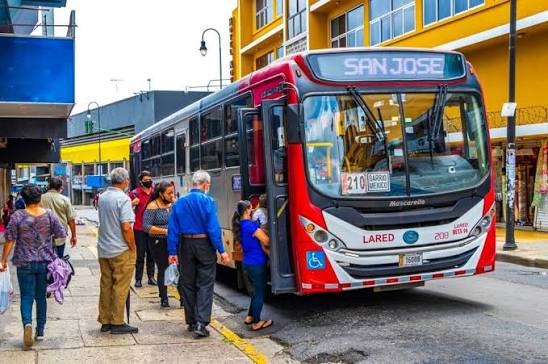
Bus travel can be an option for many journeys, but route coverage, service frequency and the last leg to your address need checking with the current operator.
- Cost-Effective: Taking the bus is one of the most affordable ways to travel. Many bus routes are inexpensive compared with shuttles, taxis, or rental cars, but fares vary by route and operator.
- Comfort: Check the operator, stops, vehicle facilities and timetable for the specific service. The labels directo and colectivo do not by themselves establish the age of the vehicle or whether it has air conditioning.
- Safety: Do not assume any journey is risk-free. Keep belongings secure and review current local conditions around the stops, terminal and walking route.
2026 Budget Stress Test
Costa Rica budgets should be tested against less convenient assumptions before they guide a move.
- Run a conservative version with higher rent, private healthcare, car costs, imported goods, insurance, and exchange-rate movement.
- Separate one-time setup costs from recurring monthly spending.
- Keep an emergency reserve for medical care, travel home, housing changes, and bureaucracy delays.
2. Driving and Buying a Car
Having your own vehicle offers the ultimate freedom, but it comes with significant costs and responsibilities.
- The Cost of Cars: Vehicles can cost significantly more than comparable North American prices because of taxes, duties, local market conditions, and availability.
- Buying vs. Importing: Compare a locally registered vehicle with the full cost and process of importing your own. Include inspection, ownership transfer, insurance, maintenance and parts availability; do not choose solely on the advertised purchase price.
- Road Conditions: Check current conditions for the exact route, including paved sections. Potholes, unpaved surfaces, drainage problems and rainy-season washouts can affect the journey; do not infer road quality from a highway label. If you live in rural, steep, coastal, or rainy-season areas, a higher-clearance vehicle or 4×4 may be worth considering.
- Driving Culture: Costa Rican driving can be aggressive and unpredictable. Defensive driving is essential. Avoid driving long distances at night, as roads are often unlit, lack guardrails, and may have pedestrians or animals on the shoulder.
3. Taxis and Rideshares
For shorter trips or airport transfers, taxis and rideshares are convenient options.
- Official Taxis: Official Costa Rican taxis are red with a yellow triangle on the door. Airport taxis are orange. Always ensure the driver uses the meter (the maría).
- Rideshare Apps: Uber and other rideshare apps operate in parts of Costa Rica and are commonly used in the Central Valley and some tourist areas. Availability, pickup rules, and local enforcement can vary, so confirm current conditions before relying on them.
- Piratas: Informal, unlicensed taxis (known as piratas) are common in rural areas. Do not infer licensing, insurance or safety from local popularity. Confirm the provider and pickup arrangements before travelling.
4. Domestic Flights
If you want to avoid long, winding drives, domestic flights are a fast alternative.
- The Airlines: Sansa is one of the best-known domestic air options in Costa Rica, operating small single-engine planes.
- The Routes: Flights connect the main airport in San José (SJO) to regional airstrips in popular destinations like Tamarindo, Nosara, Quepos, Puerto Jiménez, and Drake Bay.
- The trade-off: Compare the complete door-to-door journey, including ground transfers, check-in, the booked flight and any connection. Check the operating route, schedule, fare and baggage terms for your dates; a general flight-versus-drive example does not establish the time or cost of your journey.
5. Walking and Biking
Depending on where you live, you may be able to rely on your own two feet.
- Walkable Towns: Many towns in the Central Valley (like Atenas or Grecia) and compact beach towns (like Playas del Coco) have walkable centers where you can easily reach the grocery store, pharmacy, and restaurants.
- Biking: Bicycles are popular in coastal towns. However, biking on major highways or narrow mountain roads can be extremely dangerous due to the lack of bike lanes and fast-moving traffic.
Looking for a home in a walkable community? Contact us today to ask about relocation planning and local resources.
Planning your move budget? Open the savings finder to organize your budget assumptions, or send us a planning question or correction.
Names, Numbers and Rules Worth Knowing
Buses and shared shuttles. Confirm the current operator, terminal, stops, fare and last departure for your complete route. For a shared shuttle, ask whether your exact address is served or a meeting point is required, what luggage is accepted and how connections or delays are handled. Compare the whole journey, including the trip to the stop and the return home.
Driving and owning a car. Check which licence rules apply to your immigration status before driving. MOPT’s foreign-licence homologation guidance explains the in-person appointment and the separate licence-printing step; review the current requirements for your case. Before buying, check the vehicle’s marchamo and compulsory insurance, and confirm its inspection status and next due date with DEKRA. Do not treat an inspection as a guarantee of a car’s condition. For an import comparison, obtain an itemized quote for the specific vehicle, including shipping, customs charges and registration, rather than applying a single percentage to the purchase price.
Comparing cover for a car you own? Read Russ Martin’s interview on comparing Costa Rica car insurance, with a printable quote worksheet. Separate compulsory cover from the additional policy you are comparing. His answers describe WheelsCR’s experience; confirm the insurer’s current wording, exclusions, deductibles and claims arrangements for your situation.
Taxis and rideshare. Confirm the service available at your actual pickup point, how it may be booked, how the fare is calculated and how you will identify the vehicle. Check current local pickup rules before relying on an app, especially at an airport. Ask about luggage, assistance or equipment you need; a general service label does not confirm suitability.
Domestic flights. Confirm the operating airline, exact departure airport, current route and ground transfers before comparing a flight with a drive. Check your booked fare’s baggage allowance rather than assuming a combined 14 kg limit. SANSA’s baggage policy distinguishes the personal item from checked baggage, makes the checked allowance fare-dependent, and says excess baggage may travel on a later flight.
Fuel and navigation. Check the current published fuel tariff and the fuel your vehicle requires. Plan usable fuel stops along the actual route, including opening hours and payment arrangements. Confirm the destination entrance with the host or venue; a navigation app or landmark description does not establish road conditions or access.
Targeted update September 30, 2026: licence-process links, vehicle checks and SANSA baggage guidance checked against the linked official sources. Other routes, fares and services require confirmation for your journey.
Can You Complete an Ordinary Errand Without a Car?
Test the return journey too: For an appointment, work backwards from the required arrival time, then check the return trip and a backup if it runs late. Record the actual pickup point, walking conditions and total journey cost. A route that works at midday may not work for an early appointment.
Need an adapted vehicle? Read Stephanie Sheehy Protti’s questions to settle before booking adapted transport. Check the actual vehicle and transfer arrangements for your route; a general transport category does not establish suitability or availability.
Choose one grocery trip and one appointment route from a shortlisted rental. Check the full journey, not just whether a bus passes nearby.
If you need an adapted vehicle, read Stephanie Sheehy Protti’s interview about equipment, transfers and the complete journey. Ask whether you would remain in your wheelchair or transfer to a seat, and have the operator confirm the actual vehicle and assistance arrangements. This is one operator’s reported approach, not a certification of public transport or another company’s service.
- Identify the actual stop, operator, direction and current departure times.
- Include walking surfaces, crossings, transfers and the final stretch to your destination.
- Confirm the return service and last practical departure, including weekend or holiday differences.
- Price a backup for a missed service, heavy shopping or an appointment that runs late.
Record elapsed time and total fare separately from estimates. Repeat a route when conditions differ before relying on it for an essential appointment. Use the scouting planner to compare two bases, and apply the rental viewing checklist to the addresses they serve.
Frequently Asked Questions
Do I need a car in Costa Rica?
Not always. Some towns work with buses, taxis, and walking, while rural or spread-out areas often require a car for convenience.
Is driving in Costa Rica difficult?
Driving can be manageable, but road conditions, rain, mountain routes, signage, and night driving can be challenging for newcomers.
Are buses reliable in Costa Rica?
Buses are widely used and affordable, but schedules, route coverage, and comfort vary by region and town.
Free Costa Rica Planning Kit
Make your scouting trip answer the questions that matter.
Two-Base Scouting Record
- Record each base’s conditions, quotes and everyday routines.
- Compare two bases using the same observation prompts.
- Record observations and follow-up actions before choosing a home.
Regional Budget & Cost-of-Living Worksheet
- Compare three regions using your own current quotes.
- Separate monthly costs, moving expenses and reserves.
- Track source dates and test a higher-cost scenario.
Download the PDFs and CSV templates now
Optional: enter your email to request the same resources. Your email is recorded privately for this request; this does not enroll you in marketing emails.
Prefer not to enter an email? Open the download hub. Privacy policy. Planning tools, not individual professional advice.
Continue with these planning guides

Renting vs. Buying in Costa Rica: Which Makes Sense for Retirees?
Compare renting versus buying in Costa Rica for retirees, including first-year strategy, legal risks, lifestyle testing, and when ownership may make sense.

Healthcare
Compare Costa Rica’s Caja system, private care, insurance options, regional access and likely costs when planning healthcare as an expat.

Costa Rica Exploratory Trip Itinerary: 14 Days To Compare Regions
Plan a 14-day Costa Rica exploratory trip to compare regions, costs, healthcare access, transportation, climate, and everyday lifestyle before relocating.