
An electricity bill is a useful starting point for a solar proposal, but Thomas Fees also wants to know when a household uses its power. A pool pump running in daylight and air-conditioning running through the night create different planning needs.
For this Costa Rica Havens interview, the founder and CEO of IntiTech Solar explains how his team approaches consumption, essential circuits, equipment choices and a budget that may require a project to grow in stages.
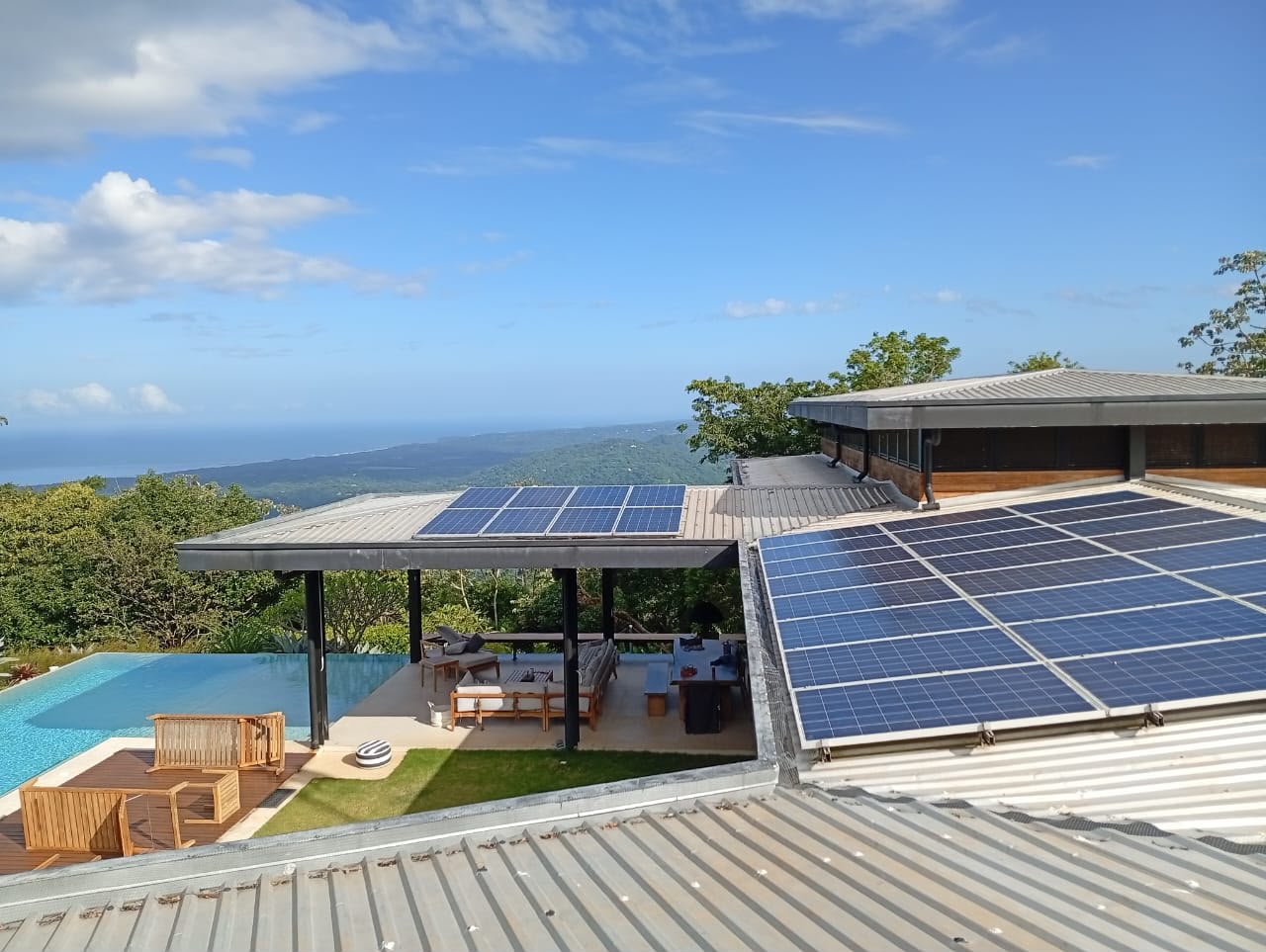
Courtesy Thomas Fees / IntiTech Solar.
Interview by Ken Gardner. Edited from Thomas’s written answers and approved by him on October 6, 2026. This conversation describes his approach; ask for a current proposal for your own property.
1. What information should a homeowner gather before asking for a proposal?
For an on-grid system, we start with the electricity bill and information about the roof. For an off-grid system, we need a detailed estimate of consumption. That means looking at the equipment the household will use and its expected operating hours.
For what we call a smart-grid system, we also need to understand consumption and decide whether the system will serve the critical loads or a larger share of the home’s loads. For a house under construction, that involves a load analysis based on planned use.
If the house is already operating, we recommend taking electricity-meter readings at 7 a.m., at 5 p.m. that day, and again at 7 a.m. the following morning. This helps us look at consumption during daylight and overnight.
All three approaches need roof information. For off-grid and smart-grid systems, we also need the peak demand to size the inverter.
2. How do you explain the different system arrangements?
We work with on-grid, off-grid and smart-grid systems.
An on-grid arrangement produces electricity during sunshine hours. Whether excess production can be exported, and on what terms, must be checked with the local electricity provider. This arrangement does not necessarily include batteries. The local conditions and charges matter when deciding whether it is the right approach for a particular home.
An off-grid system is for a property where grid electricity is not available. We need a detailed picture of the household’s expected consumption to plan it.
In the systems we describe as smart grid, the grid is a backup source. One arrangement is to have solar and batteries cover the critical loads, while the remaining main loads are supplied by the grid. Deciding which loads belong in each group is part of the planning.
3. Why does the time of day matter so much?
We separate consumption during sunshine hours from consumption outside those hours. A pool running from 9 a.m. to 3 p.m. or a washing machine used at 10 a.m. falls into the daytime group. Air-conditioning used at night falls into the other group.
Our load analysis records both the equipment and its hours of use. The total consumption matters, but so does its distribution across the day and night.
We also look at opportunities for what we call smart loads. For example, if the battery is full, household consumption is low and there is plenty of sunshine, that energy could be used to heat water in a well-insulated tank or pump water from a well to a storage tank for later gravity-fed use. These are examples of matching a useful task to the hours when solar energy is available.
4. How do you coordinate with the homeowner and the people working on the property?
We create a WhatsApp group with the client and, where applicable, the architect, electrician and foreman. We share videos and use the group to ask and answer questions about the project.
If the client wants us to visit the site, we charge a fee that depends on the distance. If the client then purchases the system from us, we credit that fee toward the purchase as a down payment.
5. What matters when choosing equipment and reviewing a proposal?
We have operated in Costa Rica since 1999 and have always looked for a balance between equipment quality and price. Return on investment is an important part of the decision for our clients.
Equipment and pricing change, so we compare the options for the project in front of us. Our estimates are normally valid for two to three weeks; customers should check the validity date and current scope of their own quote.
Our contract sets out the equipment, production estimates and explanation of the work, along with the warranty, payment and process terms. Those details belong alongside the price when reviewing a proposal.
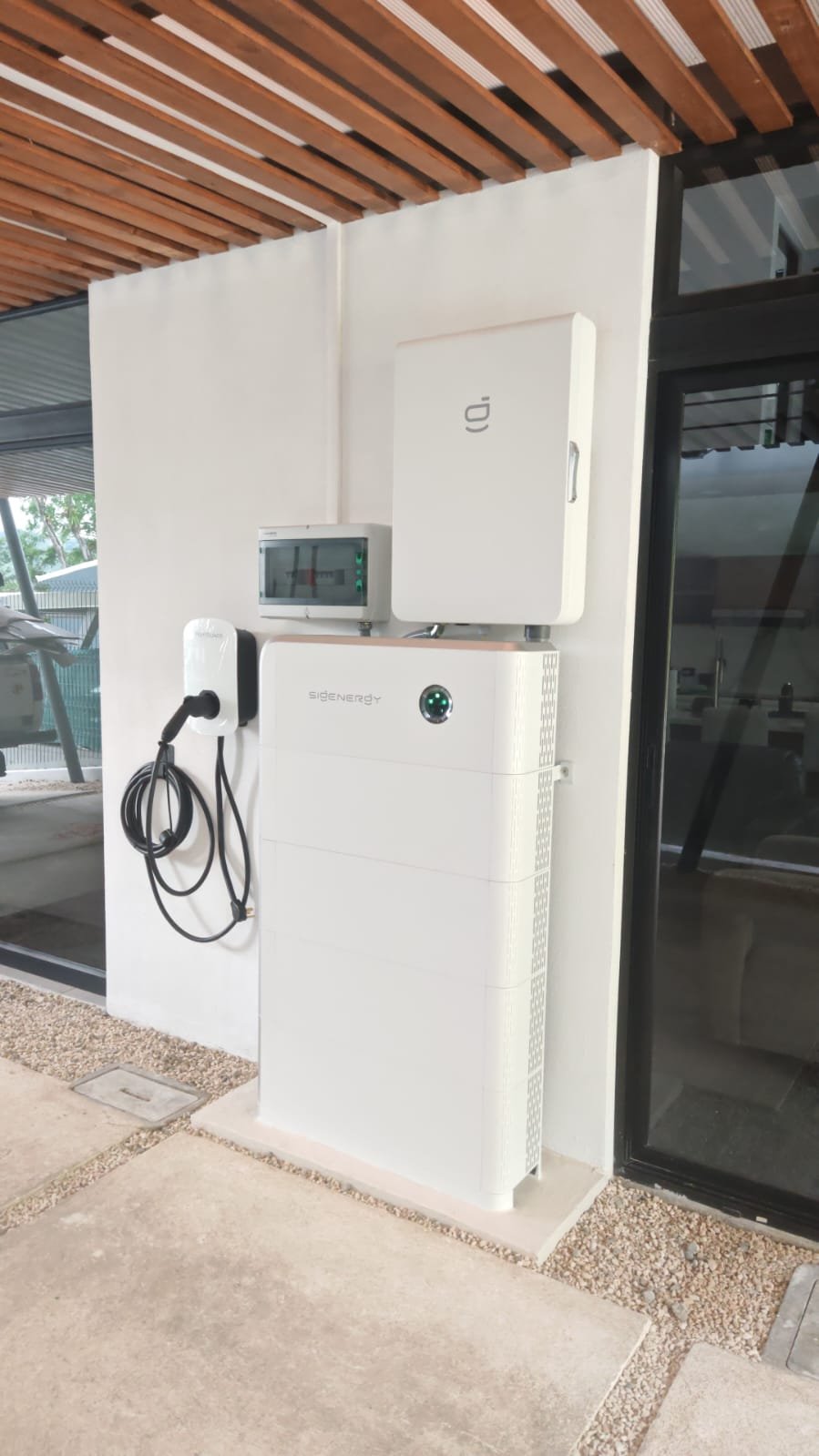
Courtesy Thomas Fees / IntiTech Solar.
6. What can a homeowner do if the proposed system is over budget?
Sometimes a detailed load analysis leads to a system size that exceeds the client’s budget. In that situation, we may recommend installing the planned solar panels but starting with a smaller battery, then adding battery capacity later if the household can benefit from storing more solar energy.
The decision depends on consumption habits and hours of use. Looking at how the household uses electricity helps us discuss what to install initially and what might make sense to add later.
Before requesting a proposal
Editorial checklist based on this conversation:
- Gather the electricity bill and information about the roof.
- List the appliances and equipment, including when and how long they run.
- Identify which loads you want the proposed system to serve.
- Explain your priorities: electricity savings, backup power, or supplying a property without grid service.
- Ask the installer to spell out the proposed equipment, expected performance, warranty, scope of work and payment terms.
About Thomas Fees
Thomas Fees is the founder and CEO of IntiTech Solar, which he says has operated in Costa Rica since 1999. The company works with on-grid, off-grid and smart-grid solar systems.
Website: https://www.intitechsolar.com/
Facebook: IntiTech Solar Costa Rica
Useful next interviews
- Read the interview: Buying Property in Costa Rica: Before You Pay a DepositBroader planning: Countrywide