
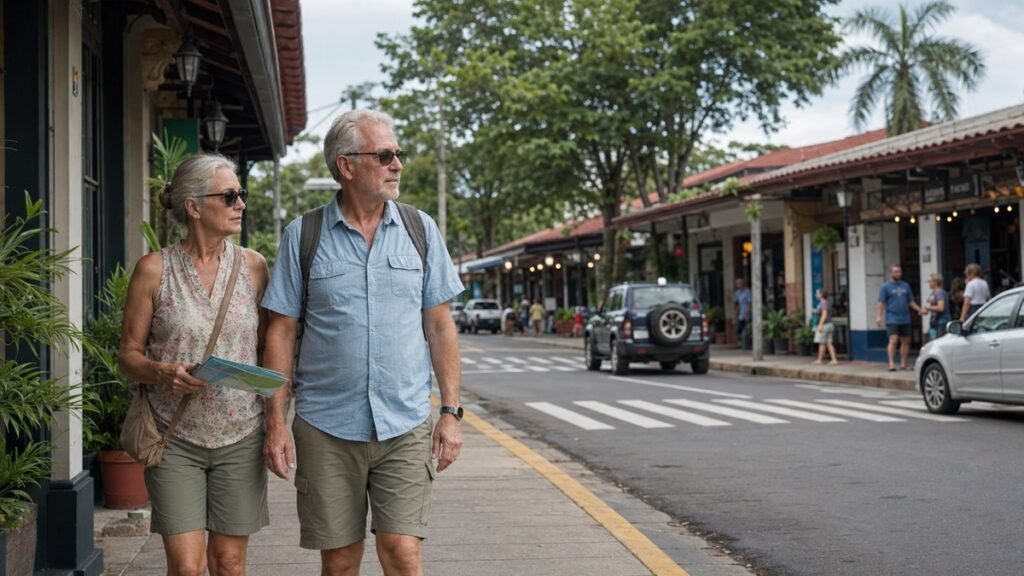
Safest Places in Costa Rica? A Practical Safety Guide for Expats
Safety is one of the most personal parts of choosing where to live in Costa Rica. Instead of looking for a single safest place, it is usually more useful to compare neighborhoods, housing choices, transportation, healthcare access, and the strength of the local community.
Independent planning resource · Verify changing requirements with primary sources
Click or tap to choose a section
Why Safest Places Lists Can Mislead
When researching a move to Costa Rica, it is natural to search for the “safest places” to live. However, safety is highly subjective and localized. A town that feels secure to a single digital nomad might present different challenges for a family with young children or a retiree with mobility concerns. Crime rates can vary significantly not just between towns, but from one neighbourhood to the next. Relying solely on broad lists can create a false sense of security or cause you to overlook excellent communities that simply have a more nuanced safety profile.
Safety Factors to Compare Before Choosing a Town
There is no guaranteed risk-free destination. Compare the home’s entrance, lighting, locks, communication options and routes you would use. Ask who is responsible for building security and how to request help. A gated development or active community may have arrangements worth investigating, but neither establishes the crime risk of an address.
Neighbourhood Matters More Than City Labels
Conditions can differ within the same town. Investigate the specific neighbourhood, property and journeys you are considering rather than assigning the whole city one safety label. Visit at the times you would normally travel, ask how residents obtain current local notices, and compare the written security and emergency arrangements of shortlisted homes.
How to Use Official Travel Advisories
Official government advisories are essential tools for safety planning, but they require context. The U.S. State Department Costa Rica travel advisory and the Government of Canada Costa Rica travel advice provide broad overviews of national trends and specific regional warnings. Use these advisories to understand the baseline risks, such as common types of petty theft or areas with higher incidents of violent crime. Use advisories for identified risks and supplement them with local observations; anecdotes and a preferred neighborhood do not override an official warning.
Ask residents about your exact address and everyday routes
The best insights often come from those already living in the area. When connecting with local expats and residents, ask specific, practical questions rather than general ones about safety. Inquire about their daily routines: Do they feel comfortable walking at night? What security measures do they use for their homes? Have there been recent issues in their specific neighbourhood, and how did the community respond? Their answers will provide a much clearer picture of the local environment than any online forum.
Compare places: these are not safety rankings
Expats frequently compare several popular regions when planning their move. It is important to approach these comparisons with a focus on safety planning rather than seeking an absolute guarantee. For a broader overview of the country, explore our Costa Rica regions guide.
Central Valley
In the Central Valley, compare the actual street, building entrance and journeys you would make. Ask about lighting, controlled access, transport after evening activities and the hospital appropriate for your needs. Proximity to San José does not establish a particular neighbourhood’s crime risk or emergency response time.
Atenas
For an Atenas property, compare the town-centre route with any hillside or more remote approach. Ask how you would reach groceries, appointments and home after an evening outing. Investigate the home’s access and communication arrangements; an expat community or friendly introduction is not evidence that an address is secure.
Grecia
In Grecia, investigate the exact neighbourhood rather than applying a town-wide reputation. Check the walking route to the transport you plan to use, access after dark, the property’s security arrangements and how you would obtain help. Seek several recent, specific accounts and check them against current official guidance.
Escazú / Santa Ana
For Escazú and Santa Ana, ask what a development’s security service actually does, when staff are present and how a visitor or emergency vehicle gains entry. Compare the surrounding route and the home’s own access arrangements. A gate, guardhouse or higher property price does not establish safety or guarantee a response.
Lake Arenal
Around Lake Arenal, map the exact address and road approach before comparing homes. Confirm mobile reception, who can assist, transport options and the route to appropriate medical care. Measure or confirm journeys for the conditions you expect; do not infer crime levels or response times from population density alone.
Tamarindo
In Tamarindo, plan how you would manage belongings, get home from an evening activity and reach services during your intended season. Check the specific route, accommodation access and current official advice. Visitor activity and a beach-town reputation cannot establish the risk at an individual address.
Puerto Viejo / Caribbean Coast
For a Caribbean-coast location, identify the town and address first, then investigate the route, transport, communications and access to help. Ask residents about the particular routine you expect to follow and when their information was observed. A broad coast-wide label cannot describe all neighbourhoods or replace an official warning.
Southern Pacific Towns
For Uvita, Dominical or another Southern Pacific location, inspect the final approach to the home as well as the main road. Confirm lighting, access, communications, transport alternatives and who can assist if a usual route is unavailable. Compare these concrete arrangements rather than treating scenery, isolation or a community label as a safety rating.
Housing, Transport, Healthcare Access, and Community as Safety Factors
Compare housing access, transport, communications and healthcare alongside crime information. A condominium, gated development and standalone home require different checks, but none is automatically the safest option. Ask who manages access, what help is available and how you would contact it. A community network can provide useful support; it does not replace reliable services or official advice.
Red Flags When Researching Safety Online
When reading about Costa Rica online, be cautious of absolute statements. Claims that a town is “100% safe,” “crime-free,” or “perfect for everyone” are red flags. Similarly, dismiss overly alarmist reports that paint entire regions as dangerous based on isolated incidents. Look for balanced, nuanced discussions that acknowledge both the benefits and the challenges of living in a specific area.
Final Checklist Before Choosing a Destination
Before finalizing your move, use this checklist to guide your safety planning:
- Review current official travel advisories for your intended region.
- Visit the specific neighbourhood at different times of day and night.
- Assess the physical security of potential housing options.
- Evaluate the proximity and quality of local healthcare facilities.
- Speak with current residents about their daily security routines and community networks.
- Compare your findings with our guide to budget-friendly towns in Costa Rica and the cost of living in Costa Rica to ensure the location meets all your needs.
Use this town-level checklist with our broader Costa Rica safety and security guide, then compare practical trade-offs in the Costa Rica regions guide.
Frequently Asked Questions
What is the safest place to live in Costa Rica?
There is no single safest place for every expat. A specific neighborhood, housing setup, transportation routine, healthcare access, and local community matter more than a broad city label.
Are gated communities safer in Costa Rica?
Gated communities can add controlled access and shared security, but they are not a guarantee. Compare management quality, location, lighting, transport, emergency access, and how residents communicate about local issues.
How should retirees evaluate safety before moving?
Visit at different times of day, ask residents specific questions, check official advisories, review healthcare and transport access, and rent before making a permanent housing decision.
Are tourist beach towns less safe than inland towns?
Tourist areas can have more petty theft and crimes of opportunity, while rural areas may have slower emergency response. The right comparison depends on the specific neighborhood and your daily routine.
Thinking about moving to Costa Rica? Get in touch — send us your questions or suggestions.
Free Costa Rica Planning Kit
Make your scouting trip answer the questions that matter.
Two-Base Scouting Record
- Record each base’s conditions, quotes and everyday routines.
- Compare two bases using the same observation prompts.
- Record observations and follow-up actions before choosing a home.
Regional Budget & Cost-of-Living Worksheet
- Compare three regions using your own current quotes.
- Separate monthly costs, moving expenses and reserves.
- Track source dates and test a higher-cost scenario.
Download the PDFs and CSV templates now
Optional: enter your email to request the same resources. Your email is recorded privately for this request; this does not enroll you in marketing emails.
Prefer not to enter an email? Open the download hub. Privacy policy. Planning tools, not individual professional advice.
Continue with these planning guides
Cost of Living in Costa Rica 2026: Monthly Budgets, Rent and Healthcare
What does it cost to live in Costa Rica? Compare 5 sample budgets for singles and couples, with rent, healthcare and costs to check before moving.

Renting vs. Buying in Costa Rica: Which Makes Sense for Retirees?
Compare renting versus buying in Costa Rica for retirees, including first-year strategy, legal risks, lifestyle testing, and when ownership may make sense.
Costa Rica Exploratory Trip Itinerary: 14 Days To Compare Regions
Plan a 14-day Costa Rica exploratory trip to compare regions, costs, healthcare access, transportation, climate, and everyday lifestyle before relocating.